




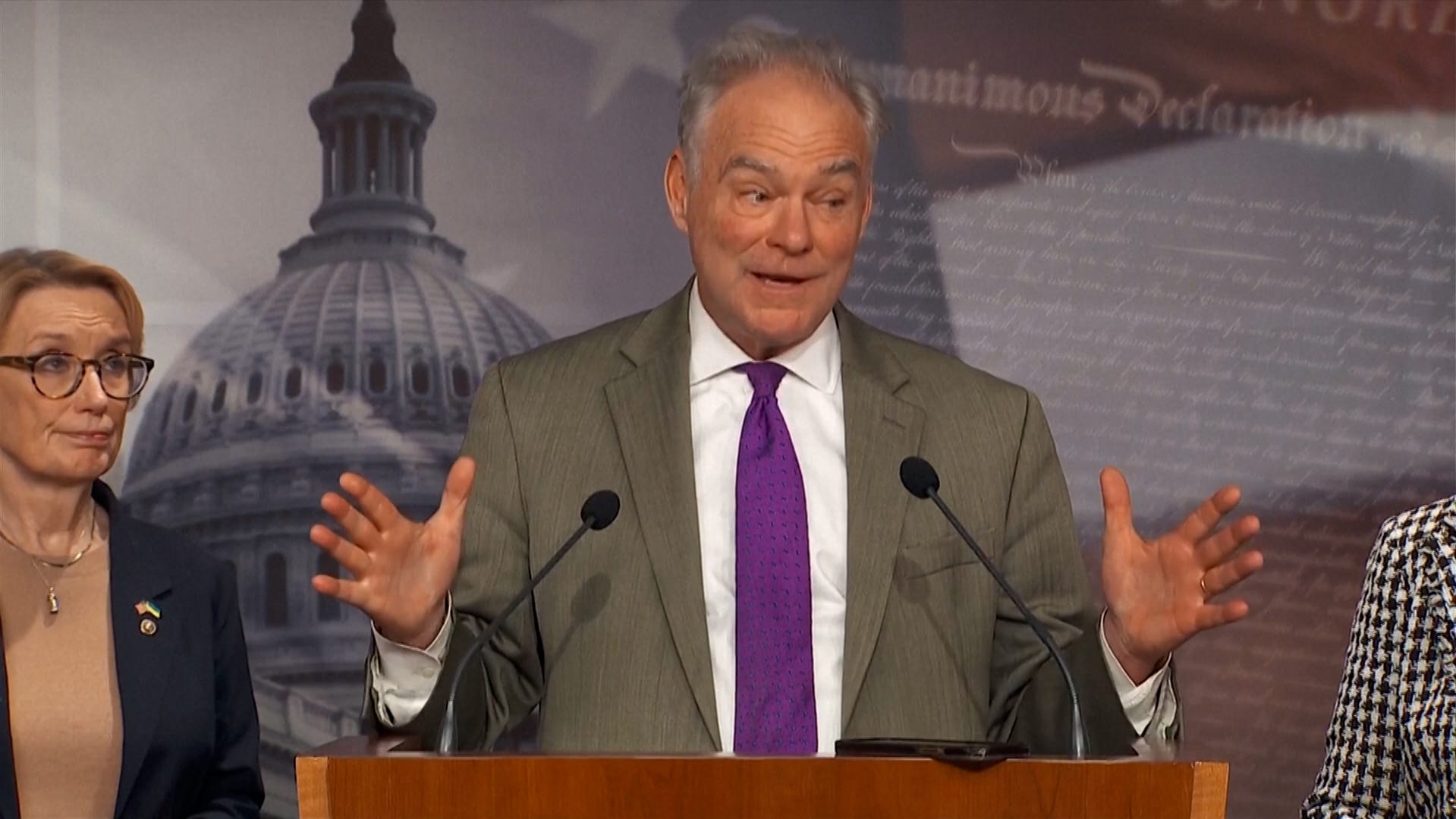

Senators take steps to end government shutdown. Here’s what’s next
Eight senators broke with party ranks to vote to end the government shutdown. Here’s what’s next.
- If the shutdown continues through Dec. 1, the Bipartisan Policy Center says roughly 4.5 million paychecks will be withheld from federal civilian employees, adding up to about $21 billion.
- A 2019 law mandates retroactive pay once the shutdown ends, according to details in “Guidance for Shutdown Furloughs” issued in September by the U.S. Office of Personnel Management.
The end of the federal government shutdown can’t come quick enough for many wallets in Michigan.
Michigan hasn’t been the worst hit by far. But the state ranks No. 11 for personal financial stress, according to one estimate of how much the federal government shutdown is costing workers in every state, according to research by GOBankingRates.com, a website that highlights CD rates, personal loans and other financial information.
Michigan federal workers on average have missed an estimated $10,806 in pay each since the shutdown began through early November, according to research by GOBankingRates, which pegged Michigan’s number of federal government employees at 29,822.
The average reflects that many Michigan federal government may work in professional, higher-paying fields, according to Rudri Patel, senior financial write and finance expert for GOBankingRates.com.
The average annual salary listed federal workers was $106,597 for federal workers in Michigan, according to the GOBankingRates.com research.
Maryland, New Jersey and Virginia rank as the top three states for the most money withheld on average for workers, according to the numbers cranked out by GOBankingRates.com.
According to that Nov. 6 study, federal employees lost access to more than $12,000 in each of these three top states.
When it comes to Michigan, federal government employees
How was the calculation done? The research team at GOBankingRates.com found the average amount of money withheld due to the shutdown by calculating the total cost of living for each state using the average mortgage and expenditure costs.
The team used data from the Office of Personnel Management’s FedScope to determine each state’s average salary and number of civilian federal employees. The monthly and daily income withheld was calculated. And by using the number of days without pay — 37 at the time of publishing — the missing salary was calculated. The numbers do not reflect that some workers received some pay into October.
Patel noted that many federal workers are likely needing to dip into their savings — or even borrow more money — to cover their day-to-day expenses. In Michigan, she noted, the average monthly cost of living just for necessities is $3,283.
While the losses are steep, some money is likely heading back to furloughed employees. Ideally that missing pay would eventually be restored for federal employees.
A 2019 law mandates retroactive pay once the shutdown ends, according to details in “Guidance for Shutdown Furloughs” issued in September by the U.S. Office of Personnel Management.
The safety net doesn’t apply to everyone. Government contractors, unlike direct federal employees, typically do not receive back pay after shutdowns.
The White House earlier suggested that it might choose not to issue the back pay. But right now, that seems less likely. As the shutdown dragged on, the door opened a little wider at the White House for discussions on backpay.
The U.S. Senate continued working on a deal Monday toward reaching some type of resolution to end the federal government shutdown, which was in its 41st day Monday, Nov. 10.
This year’s shutdown of the federal government broke the record for the longest stretch in history, surpassing the 21-day shutdown of 1995–1996 and the 35-day shutdown that ran from December 2018 to January 2019 during the first Trump administration.
It’s one thing to miss a paycheck or even two, but families were dealing with everyday bills that still needed to be paid the longer the federal government shutdown drags on.
Some Michigan credit unions saw the financial stress firsthand as they offered special loans and services following the government shutdown that began Oct. 1.
Since Oct. 1, Lake Trust Credit Union made nearly $290,000 in loans to help 240 members access funds for various life situations, according to an emailed statement sent by Theresa Dubiel, executive vice president and chief member experience officer.
Lake Trust is a community-based credit union that serves nearly 200,000 members and businesses throughout Michigan. It is based in Brighton.
Lake Trust, like some other credit unions, has been running a banner on the top of its website that targets those who are hurting financially due to the federal government shutdown.
Such programs are often available for credit union members who suffer jobs losses in times of a crisis, much like the loans offered during the lengthy UAW strike in 2023.
Dubiel said qualified, established Lake Trust members were allowed to borrow money to help pay monthly expenses or cover an emergency expense,
One option for qualified members was to be able skip their monthly loan payments at the credit union to free up cash for other bills in their monthly budgets.
“Since Oct. 1, we’ve had nearly 400 members skip almost 500 loan payments,” Dubiel said.
“We’ve seen an increase in requests to skip loan payments due to hardship, like a job loss or furlough,” she said.
“We understand that big life events like this have a huge impact on personal finances, so we often waive the $35 fee associated with this request.”
Michigan Schools & Government Credit Union said several of its members who were affected by the shutdown took advantage of a “Government Shutdown Loan” to help bridge the gap. The credit union did not disclose specific numbers to the Detroit Free Press.
Federal employees could borrow 100% of the previous month’s net pay up to $5,000. Under these loans, no payment is due for the first 45 days. The special loans carry a fixed annual percentage rate of 5.5% and an 18-month repayment term. No application fee is charged for the loan.
To qualify, a borrower needs proof of federal employment, such as a recent paystub. That’s if the borrower’s direct deposit is not already with Michigan Schools & Government Credit Union. Details can be found at msgcu.org/shutdownloan. Federal employees living in Michigan can join MSGCU to apply for the “Government Shutdown Loan.”
The credit union also offered a free “Skip-A-Pay” program that enabled government employees to defer their next loan payment on eligible MSGCU consumer loans.
The federal government shutdown triggered all sorts of troubles for consumers — disrupted paychecks, canceled flights and airline delays, and a brutal pause in November federal food assistance. The Supplemental Nutrition Assistance Program, which replaced food stamps and helps feed some 1.5 million Michiganders, had funding to get through October.
If the shutdown continues through Dec. 1, according to the Bipartisan Policy Center, roughly 4.5 million paychecks will be withheld from federal civilian employees, adding up to about $21 billion in missing wages.
Federal workers comprise 0.8% of the labor force in Michigan, according to data from the Bipartisan Policy Center. Figures may slightly overstate federal employment due to recent reductions in force.
By contrast, federal workers comprise 0.7% of the labor force in New Jersey, 4.1% of the labor force in Virginia, 5.5% of the labor force in Maryland and 18.9% of the labor force in Washington, D.C.
Depending on their specific pay date, civilian federal employees received partial paychecks on Oct. 10, Oct. 4, or Oct. 16, according to a report by the policy thinktank. The first pay date with zero pay for some federal workers hit Oct. 24.
The holidays, of course, are just around the corner — and many people would welcome seeing their paychecks.
Contact personal finance columnist Susan Tompor: stompor@freepress.com. Follow her on X @tompor.

Source link