



In Rochester and across the country, predatory financial practices such as payday loans, rent-to-own agreements, and high-cost installment plans continue to target people who lack financial literacy. The Consumer Financial Protection Bureau warns that a typical two-week payday loan carries a $15 fee per $100 borrowed, translating to an annual percentage rate approaching 400 percent. Rent-to-own contracts, meanwhile, can leave families paying several times the retail price for basic household goods, as the Beacon has previously documented.

People fall into these traps regularly, often within the financially formative and potentially vulnerable years of young adulthood. The good news is that these schemes can be identified and avoided with some understanding of basic personal finance skills. The bad news is that the New York State Board of Regents recently missed an opportunity to ensure young people across the state are better equipped to do so.
After years of deliberation, the Board of Regents approved a long overdue requirement that students receive exposure to personal finance education in public schools beginning next school year. But the mandate allows schools to comply by simply integrating financial literacy topics within other existing coursework.
The requirement has been widely praised as a step in the right direction. Even so, some supporters, including state Comptroller Thomas DiNapoli, have pointed out that this mandate alone does not go far enough, favoring the addition of a required standalone personal finance course.
DiNapoli has it right. The dedicated instruction, support, feedback, and accountability that come with a standalone course are the only way to ensure all students across the state leave our public schools with the essential personal financial skills required to thrive and prosper as adults.
Many other states have implemented dedicated personal finance courses, and evidence points to significant improvements in student outcomes. An op-ed by DiNapoli and state Commissioner of Education Betty Rosa points to a study of standalone financial literacy course outcomes in Utah that found higher financial knowledge, improved credit behavior, and stronger debt management among graduates. Similar results have emerged in Georgia, Idaho, and Texas. Research from the Center for Financial Literacy at Champlain College shows that the benefits of a structured personal finance course are detectable a decade after students leave high school.
Standalone courses work because they give students the time and structure to build practical skills, where short or incidental lessons often do not stick. Research from the Stanford Institute for Economic Policy Research shows that fragmented exposure produces low retention, even among adults, while coherent sequencing leads to long-term learning. Students need space to learn budgeting, saving, insurance, taxes, credit scores, debt repayment strategies, and the basics of investing. A cohesive standalone course supports that work far more than ancillary embedded coursework can.
New York has a strong precedent for how to structure this. Existing statewide requirements mandate a half-year economics course with defined standards, learning objectives, and classroom time dedicated solely to economics. Personal finance deserves a similar treatment.
Moreover, this should be in addition to economics, not in place of it. The required economics course does have personal finance standards embedded in it, but while these two subjects may be complementary, they are separate domains. Some schools do offer an optional personal finance elective in addition to the economics requirement, but this does not ensure that all students receive dedicated instruction in financial literacy.
The strongest argument for a statewide requirement is equity. Access to personal finance instruction in New York varies enormously by district. Schools serving higher percentages of low-income, Black, or Hispanic students are far less likely to offer any personal finance course. These disparities mirror national gaps in financial knowledge: Surveys from Pew Research find that lower-income and minority households report the lowest confidence in budgeting, saving, and debt management. A statewide mandate ensures that all students, regardless of ZIP code, receive essential preparation.
Public support is overwhelming. A national poll conducted by the National Endowment for Financial Education shows that 88 percent of Americans believe high schools should require a semester- or year-long financial literacy course, and 80 percent wish they had been required to take one themselves. Students echo this demand. In testimony to the Board of Regents, students specifically asked for a mandatory standalone personal finance course.
Some worry about the cost of a new requirement. The evidence suggests those fears are overstated. Several states have implemented financial literacy mandates without significant long-term budget increases. Free, high-quality curricular materials exist. Teacher training can be delivered through inexpensive online modules. The Center for Financial Literacy at Champlain College notes that effective programs often rely on already-available curriculum and low-cost professional development.
This is also a moment of policy consequence. With the Regents claiming progress with its flexible mandate while other states are moving toward full-semester personal finance requirements, New York schools risk falling behind until the policy window reopens on financial literacy education as a priority again. Rochester’s economy depends on workers capable of understanding benefits, credit, and long-term financial decisions—our students can’t afford to wait.
Students in the Rochester area and across the state deserve the same access to financial readiness as students in states that moved to a standalone requirement earlier. Our region has a long history of valuing practical education and supporting our tremendous public-school systems. Personal finance fits squarely within that tradition. It equips students with tools they will need as workers, renters, borrowers, savers, and future retirees.
A standalone personal finance course requirement is the most effective and equitable way to prepare young people for adult responsibilities. All students across New York deserve an education that will empower them to thrive and prosper throughout their lives.
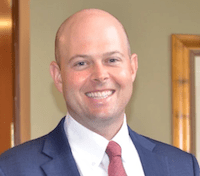
Eric W. Morris is portfolio manager and staff economist at Alesco Advisors.
The Beacon welcomes comments and letters from readers who adhere to our comment policy including use of their full, real name. See “Leave a Reply” below to discuss on this post. Comments of a general nature may be submitted to the Letters page by emailing [email protected]
Related

Source link