
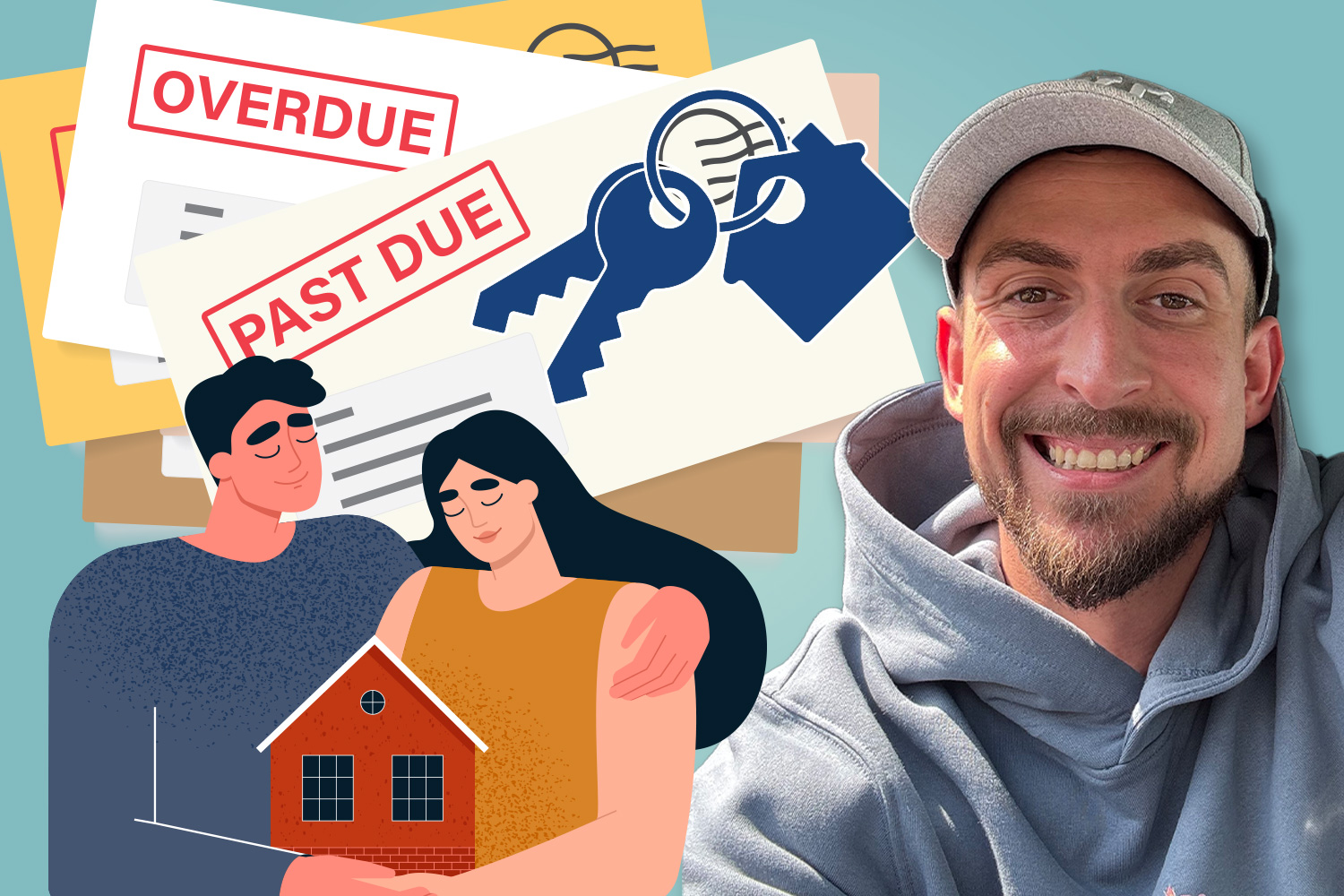

SITTING in his living room with tears rolling down his cheeks, Josh Munns felt a wave of panic surge through him as he received another email from the debt collectors.
The 32-year-old would jump every time there was a knock on the door, panicked it would be bailiffs chasing him for the £16,000 he owed – and in that moment he knew something had to change.
Over a decade the railway worker, from Bedfordshire, had racked up thousands of pounds of debt with credit cards and payday loans.
Josh had no idea or plan to pay the money back.
The dad-of-two said: “There was no way I could pay off this money in a reasonable amount of time. I tried to call the creditors to sort out a payment plan.
“A lot of the time I would get letters through threatening me with bailiffs.


“I was constantly looking over my shoulder. I couldn’t sleep properly. I was always looking at my phone and double-checking my emails.”
But just 18 months on, Josh has now cleared his debt and bought his own home.
He was able to get help with his debt from Money Wellness, a free debt advice organisation that is backed by the government’s Money and Pensions Service.
“I was in the lounge crying my eyes out. I didn’t know what to do,” Josh said.
“Then I did a quick Google search and found Money Wellness.”
The organisation helped him to apply for a free debt relief order (DRO), which froze his debts for 12 months.
Josh was eligible for a DRO as he owed less than £50,000, his savings and valuable items were worth less than £2,000 in total and he had less than £75 left over each month once he had paid his bills.
An adviser went through his debts, income and expenditure to figure out that he could benefit from a DRO.
His financial situation did not improve after 12 months, so as part of the DRO his debts were wiped.
During the DRO the companies Josh owed money to were not allowed to contact him, which he said “felt like a relief”.
Other ways to get out of debt
If you have tipped into debt after struggling to keep on top of your bills then don’t panic.
Here we explain all the options that can help you get your finances back on track.
Free debt help
You can get free debt advice from charities including Money Wellness, the National Debtline or StepChange.
Their teams will be able to give you advice on budgeting, debt solutions or free cash you may be entitled to.
For more information and to find out what help is on offer visit their websites.
Breathing Space
If you need a few weeks to get on top of your payments then you may be able to get some ‘Breathing Space’.
This is temporary protection from your creditors while you get debt advice and make a plan.
You can get the free temporary protection for up to 60 days.
You will still need to make your debt repayments.
During this time enforcement action can’t be taken against you.
Your creditors can’t contact you about your debts included in your Breathing Space.
Your creditors can’t add interest or charges to your debt.
If you are getting mental health crisis treatment then you can get up to 90 days of breathing room.
Debt Management Plan
A Debt Management Plan could help you to get on top of all your debts and help you to feel more in control.
The plan is an agreement between you and your creditors to pay all your debts.
They are usually used when either:
- You can only afford to pay creditors a small amount each month
- You have debt problems but will be able to make repayments in a few months
You can arrange a plan with your creditors yourself or go through a licensed debt management company, which will charge a fee.
If you set up a Debt Management Plan with a company then you make regular payments to the company.
The company then shares the money out between your creditors.
Some companies will also charge a set up fee and a handling fee each time you make a payment.
Bankruptcy Order
If you can’t pay off your debts then you can declare yourself bankrupt.
This is a way of writing off your debts if you have no other way to pay them.
But this is a last resort option which gives you a fresh start after 12 months.
Once you declare yourself bankrupt you don’t have to deal directly with your creditors, who are the people you owe money to.
It costs £680 to go bankrupt, although you may be able to get support from a charity to pay this fee.
Meanwhile, declaring yourself bankrupt will show on your credit file for six years, which can make it hard to get credit during this time.
The receiver, who manages your bankruptcy, may also sell high-value items such as your car or home.
Josh said: “A couple of months back the creditors were threatening me, then they were apologising for contacting me.”
Josh has now completed his DRO and his debts have been cleared.
Josh has a new partner, who has two children aged four and seven, and the couple decided they wanted to buy a new home for their young family.
But they worried the process would be difficult after Josh’s DRO.
In June, the couple got in touch with the Mortgage Advice Bureau, whose specialist advisers were able to help them find a specialist mortgage deal.
“At first we were offered an interest rate of 8%, which is ridiculous,” Josh said.
“My missus said we wouldn’t be able to afford that. But then the Mortgage Advice Bureau found us a mortgage at 5%.”
The couple had their heart set on a three-bedroom house, which cost £307,000.
Josh was able to save £2,500 to put towards the house deposit from the work he did after completing his DRO.
His partner and her father were able to add another £10,000 to the couple’s savings, which gave them £12,500 for their deposit.
They took out the mortgage with Metro Bank and moved into their new home in Bedfordshire in August.
Josh said: “My other half was buzzing and said her dream has come true.
“Our two little ones have got their own bedrooms and we’ve got our own too. We’ve been decorating and making it our own.”
How to get a mortgage after a DRO
Due to the criteria of a DRO, it is only issued to people who do not own their own home or have a mortgage.
When you enter a DRO, there is a 12-month period, called a moratorium, in which you cannot apply for significant new credit.
Pros and cons of applying for a debt relief order
A debt relief order (DRO) is a way you can write off your debts if you can’t pay what you owe.
But while it can help you get your finances back on track, it can also have serious consequences.
Here we explain the pros and cons of applying for a DRO and whether it’s right for you.
Pros of a DRO
- Companies you owe money to can’t contact you once you have applied for a DRO. They can’t take any further action against you, such as taking you to court.
- Most of your debts will be written off after 12 months, as long as your financial situation doesn’t improve during this time.
- All interest and charges on the money you owe will stop. But these can be put back on your debts if your DRO is unsuccessful.
- You don’t have to go to court as an approved intermediary will send your DRO application for you.
- You may also be able to keep your household goods, depending on their value.
- It is free to apply for a DRO and you don’t have to pay anything for advice from companies such as StepChange.
Cons of a DRO
- Your DRO will appear on the public register for fifteen months.
- A DRO will stay on your credit file for six years, which could make it hard for you to get credit in the future.
- Your DRO could be cancelled if your finances improve within the ‘moratorium period’. This is the 12 months after your DRO is approved. You may have to pay back your creditors and add interest and charges to what you owe.
- Your DRO could be cancelled if you break the rules.
- Some high-value items may be at risk of being used against the DRO, depending on their value.
This means that you cannot apply for a mortgage.
In the six years after the moratorium, the debt relief order will appear on your credit file.
Some banks will not lend to anyone in the six years after they obtained a DRO but some are more flexible.
Many lenders will consider the amount of time that has passed since the DRO.
You can improve your chances of getting a mortgage if you can prove that the financial difficulties that led to the DRO are no longer a concern for you.
One way to do this is with time and by rebuilding your credit score.
But once six years has passed, the DRO will disappear from your credit history, so lenders will not be able to see it.
This means you can apply for a mortgage based on the normal criteria.
If you want to get a mortgage in the first year after a DRO then you will need to give the prospective mortgage lender all the details of your DRO.
Some lenders will consider the type of debt you have and base how much they are willing to let you borrow on it.
Every lender has its own policy for lending to a borrower who has taken out a DRO.
As a result, the mortgage you are offered may vary and you may be asked to increase your deposit or will be offered a higher interest rate.
A mortgage broker can help you to get the best home loan.
You can find a regulated broker through Unbiased.
How to get free debt help
There are several groups which can help you with your problem debts for free.
- Citizens Advice – 0800 144 8848 (England) / 0800 702 2020 (Wales)
- StepChange – 0800138 1111
- National Debtline – 0808 808 4000
- Debt Advice Foundation – 0800 043 4050
You can also find information about Debt Management Plans (DMP) and Individual Voluntary Arrangements (IVA) by visiting MoneyHelper.org.uk or GOV.UK.
Speak to one of these organisations – don’t be tempted to use a claims management firm.
They say they can write off lots of your debt in return for a large upfront fee.
But there are other options where you don’t need to pay.
Do you have a money problem that needs sorting? Get in touch by emailing money-sm@news.co.uk.
Plus, you can join our Sun Money Chats and Tips Facebook group to share your tips and stories

Source link